


Category Archives: VARIOUS PROFESSIONS
The majority of Cretan villagers made their living through farming or livestock breeding.
Many were also involved in small-scale trade and traditional crafts. Craftsmen and merchants held the highest economic and social status, followed by livestock breeders, while farmers came last in this hierarchy. I had apprenticed and worked in several of these traditional crafts myself. Today, I can easily recall the techniques and processes involved in these occupations, which are described in this chapter.
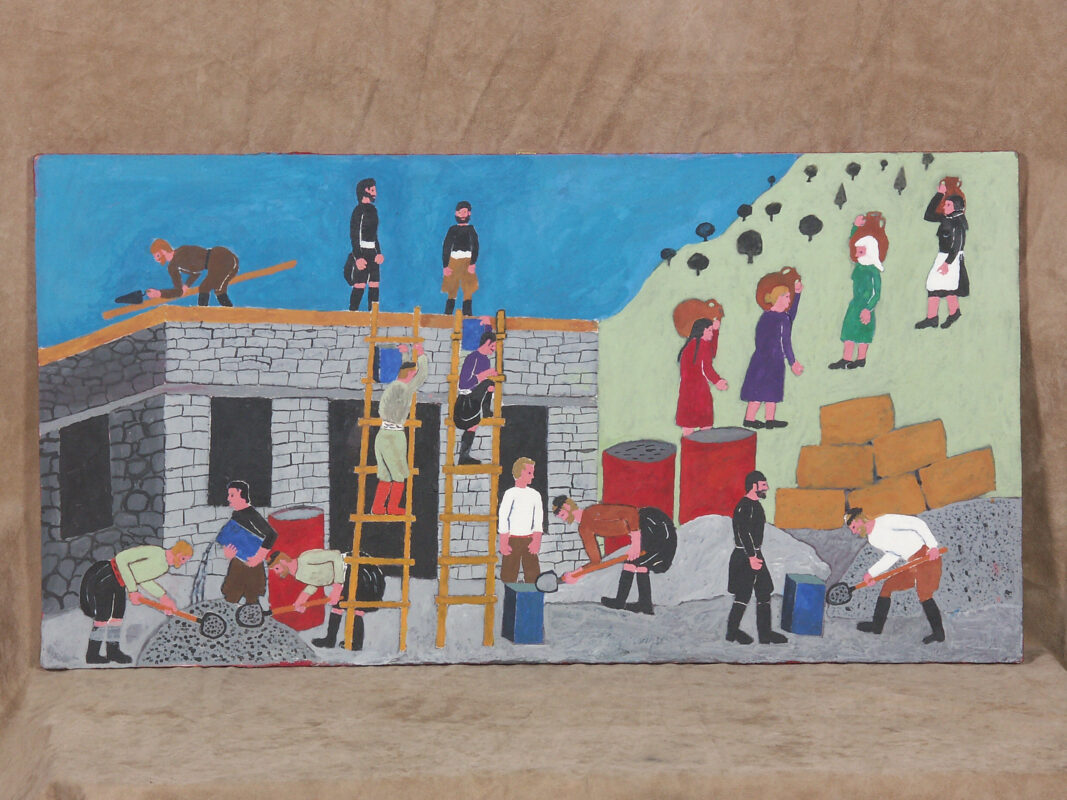
There was no lift, no cement mixer—just a bit of cement, and still, it took us a whole day. We might have gone through fifty sacks, but everyone in the village came together to help.
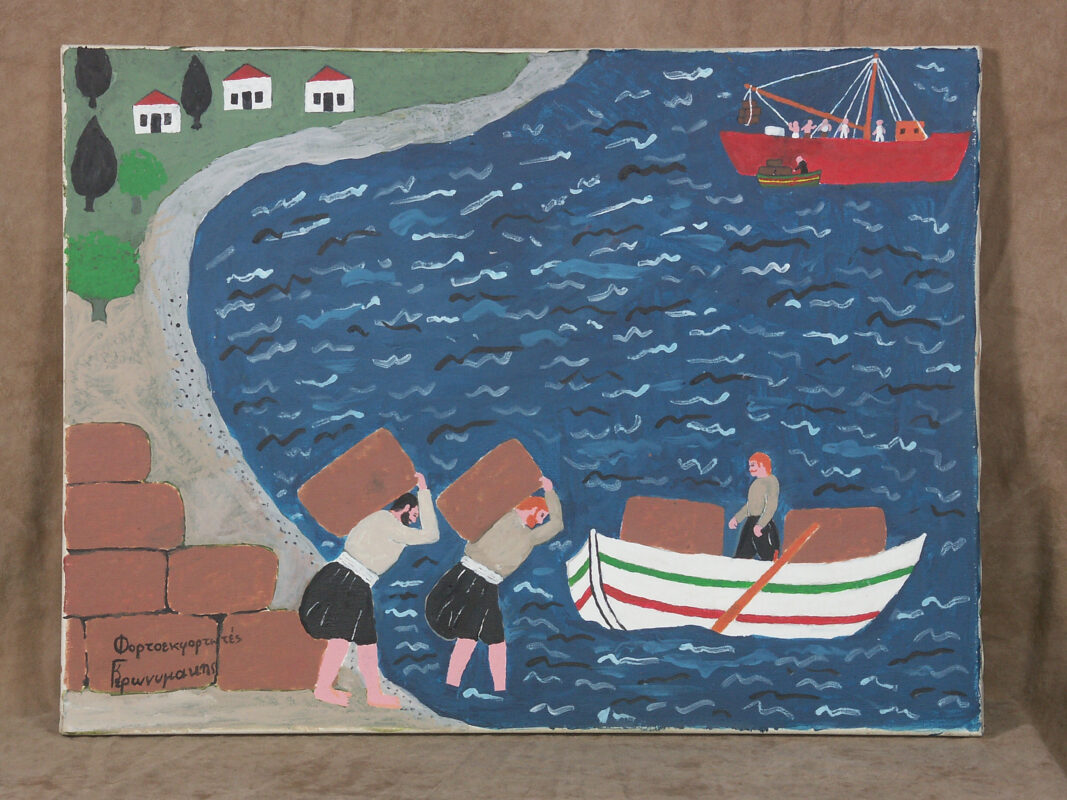
The anchor was dropped, and the loaders and unloaders transported supplies by boats from and to the shore. But even the boats could not dock at many small ports, so people took off their boots and waded into the water to reach the boat, carrying sacks on their backs.
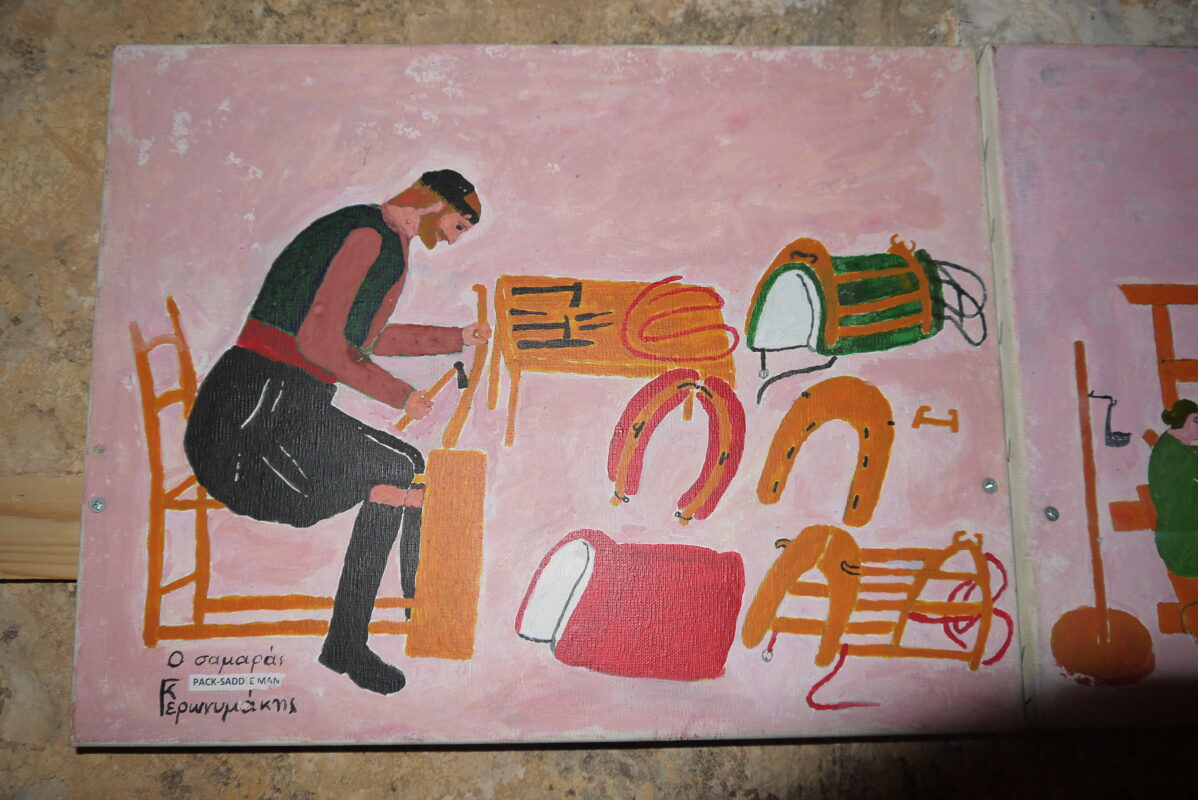
The saddler had a special chair, which instead of front legs had a piece of tree trunk,and on top of it he carved the various parts of the saddle. Back then, there was no lathe. Everything was done with an adze and a chisel.
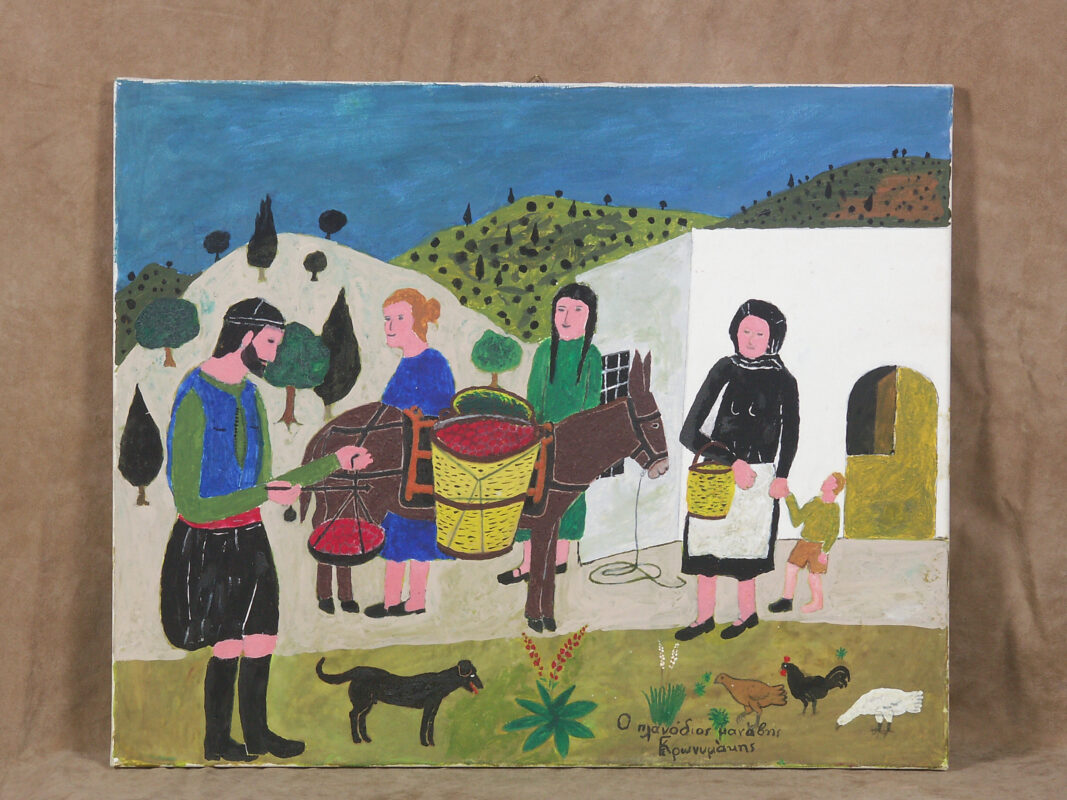
The itinerant greengrocer traveled from village to village, carrying baskets loaded on his donkey, filled with vegetables or fruits, and holding his scale, which could be a steelyard or a “fouchti” (a kind of basin used for weighing), or sometimes a spring scale. Going from village to village, he would loudly announce his goods.
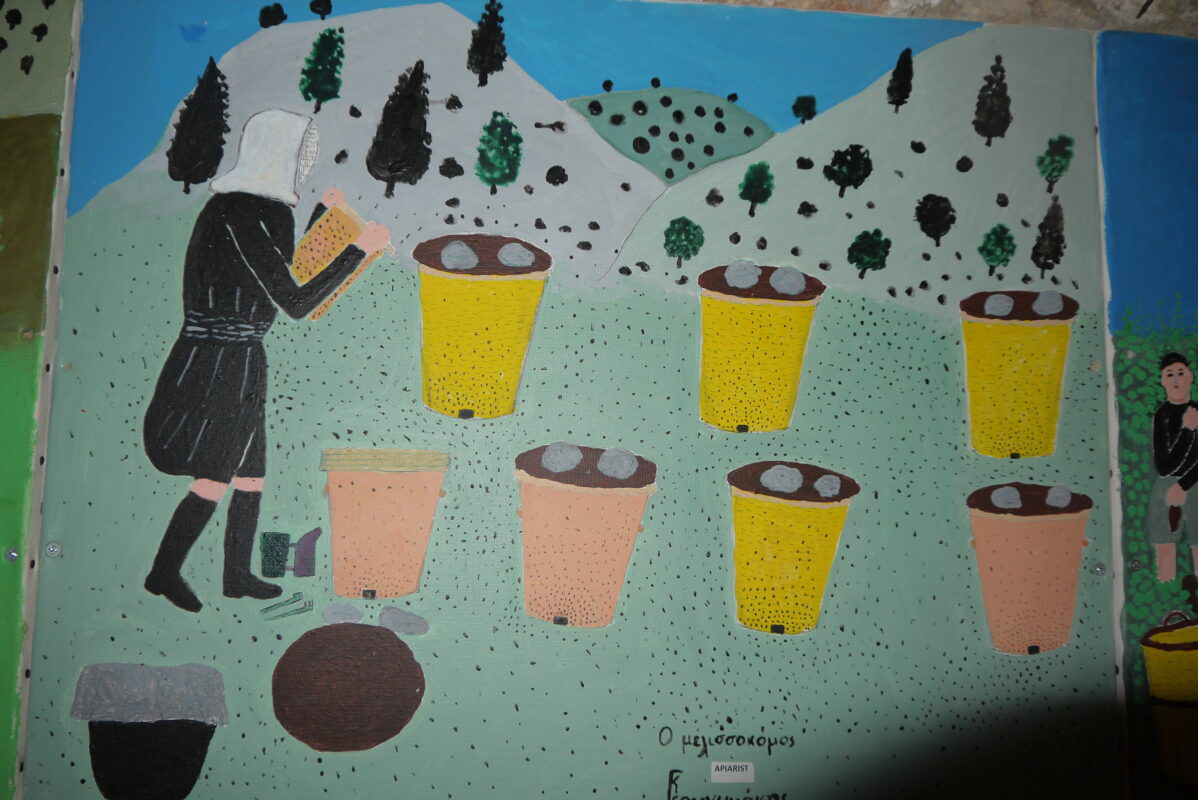
Beekeeping is a pleasant and profitable occupation. The bee has excellent organization within its hive and a system for dividing the work. As soon as the young bees emerge from their cells, they take care of the larvae, then they clean the hive, and afterwards they go outside to collect nectar and pollen. The worker […]
- 1
- 2