


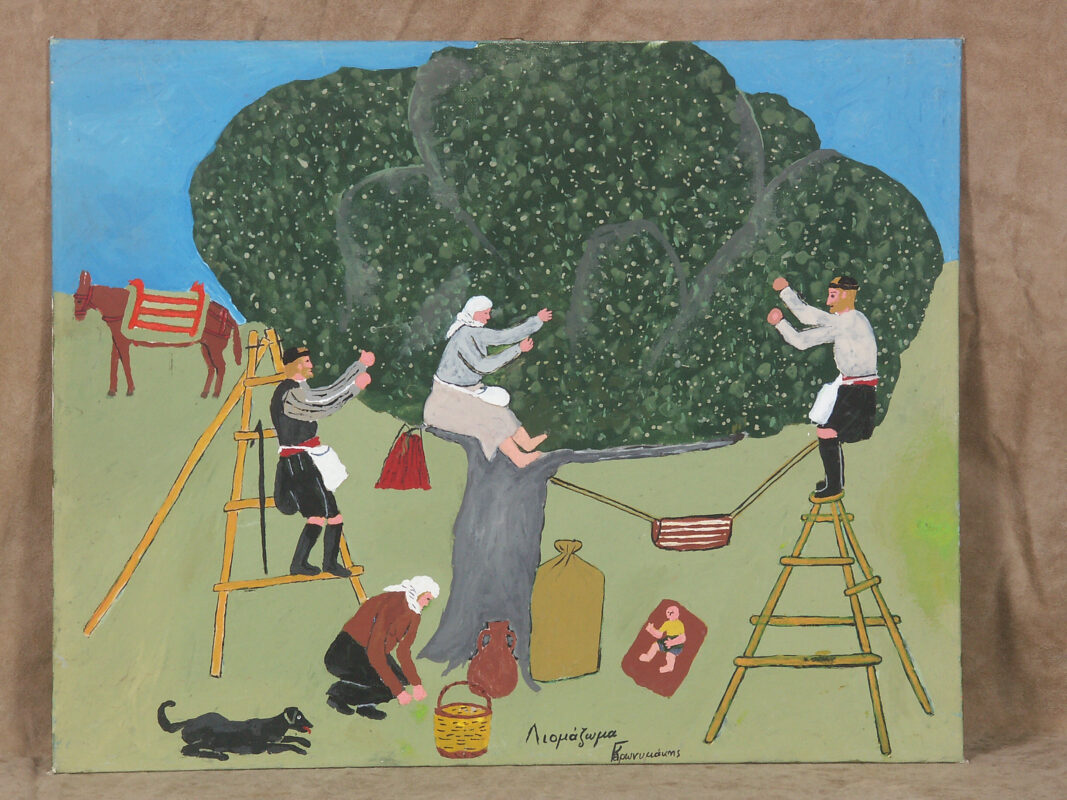
One by one, we gathered the olive fruit— from below, from above, or from the “skamna” (a small stool). We didn’t let a single olive go to waste. We would go around the bushes near the olive tree, just in case an olive was hiding there. Early in the morning, we would gather as a […]
Category Archives: AGRICULTURAL PROFESSIONS
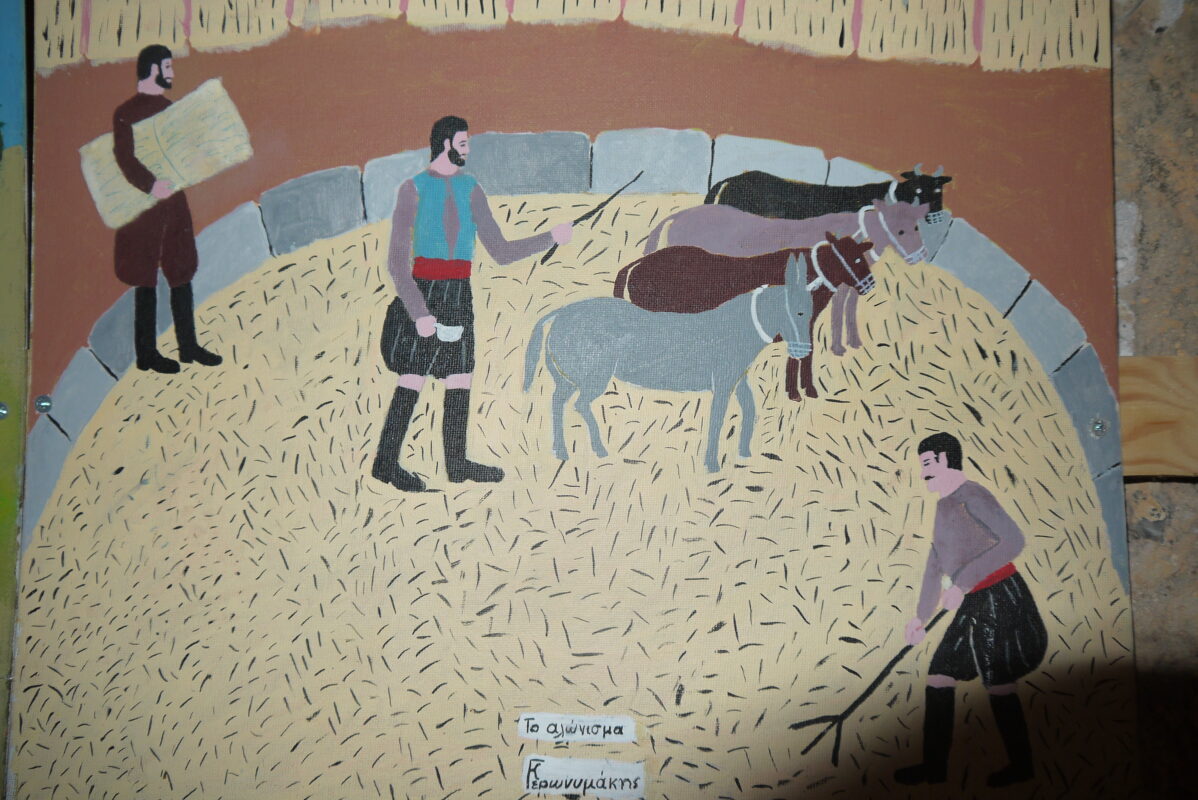
While for other hardships we went out before dawn, for threshing we went only when “the day had risen,” because the ears of grain would “rest” at night and couldn’t be cut if we started too early in the morning. Nevertheless, we all went to the threshing floor. Many had “volosyris” (a type of sickle).
After the harvesting was done, we had to prepare for threshing. The stalks from the sheaves had to be processed. We would bring five or six oxen or mules onto the threshing floor, tying them close together so they’d move in a tight circle.
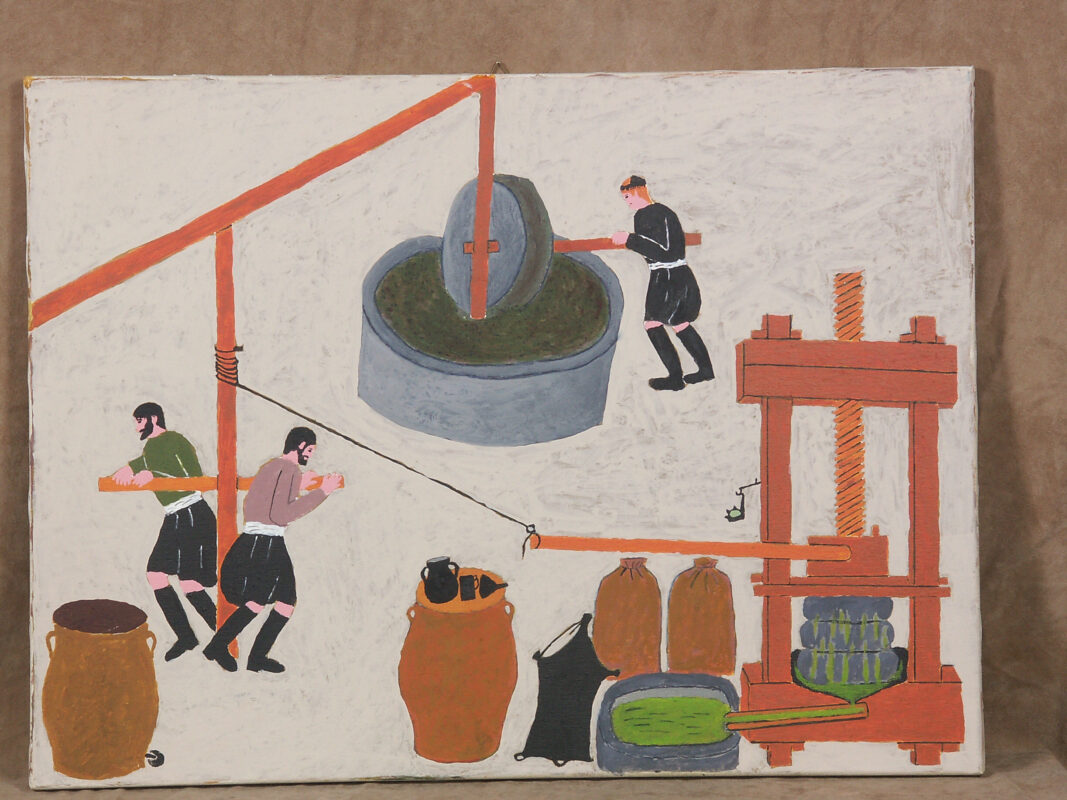
Processing of olives — Until the late 19th century, primitive olive presses were still maintained in many villages. In my homeland, I witnessed their ruins and, with the descriptions of the elders, I can still describe them: To grind the olives, they used a large stone as a base, because back then they didn’t have […]
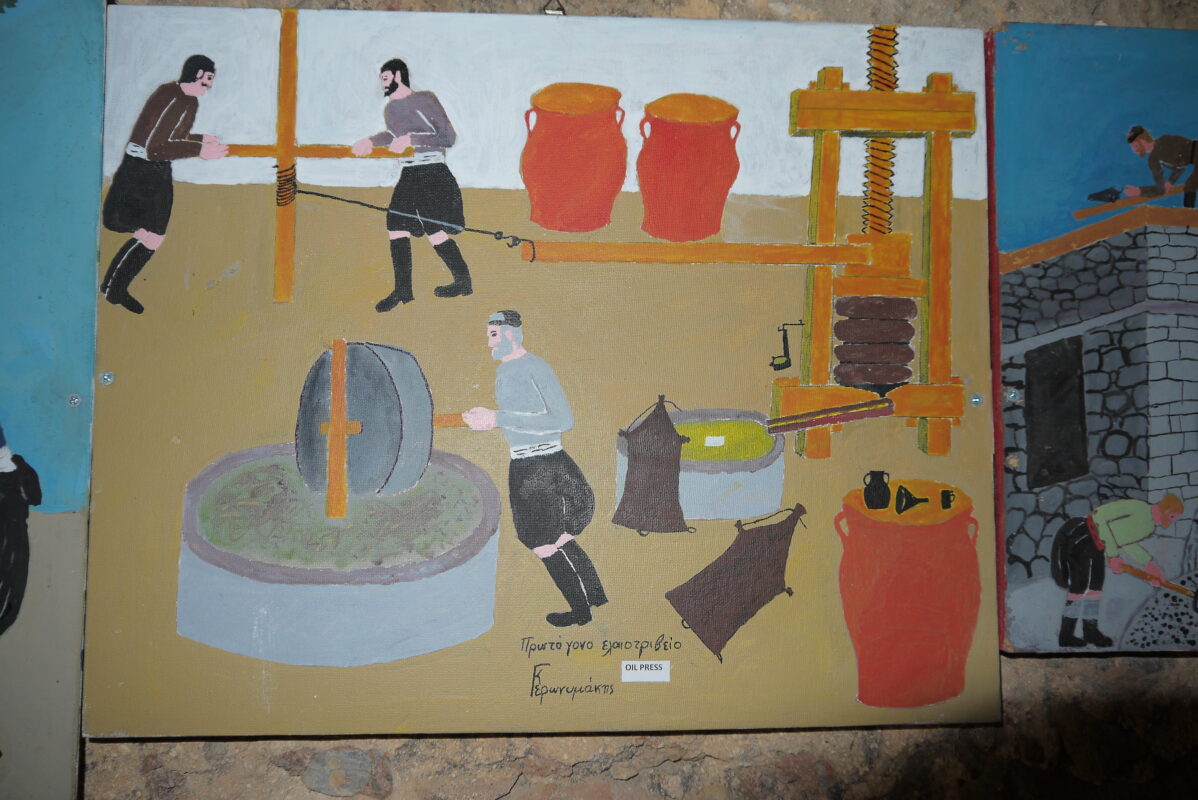
They placed a large millstone, and its axle was supported on one end by a wooden post standing upright in the middle of the base. The other end of the axle extended outward, and a man would push it with his chest and hands, turning the millstone to crush the olives. The part of the […]
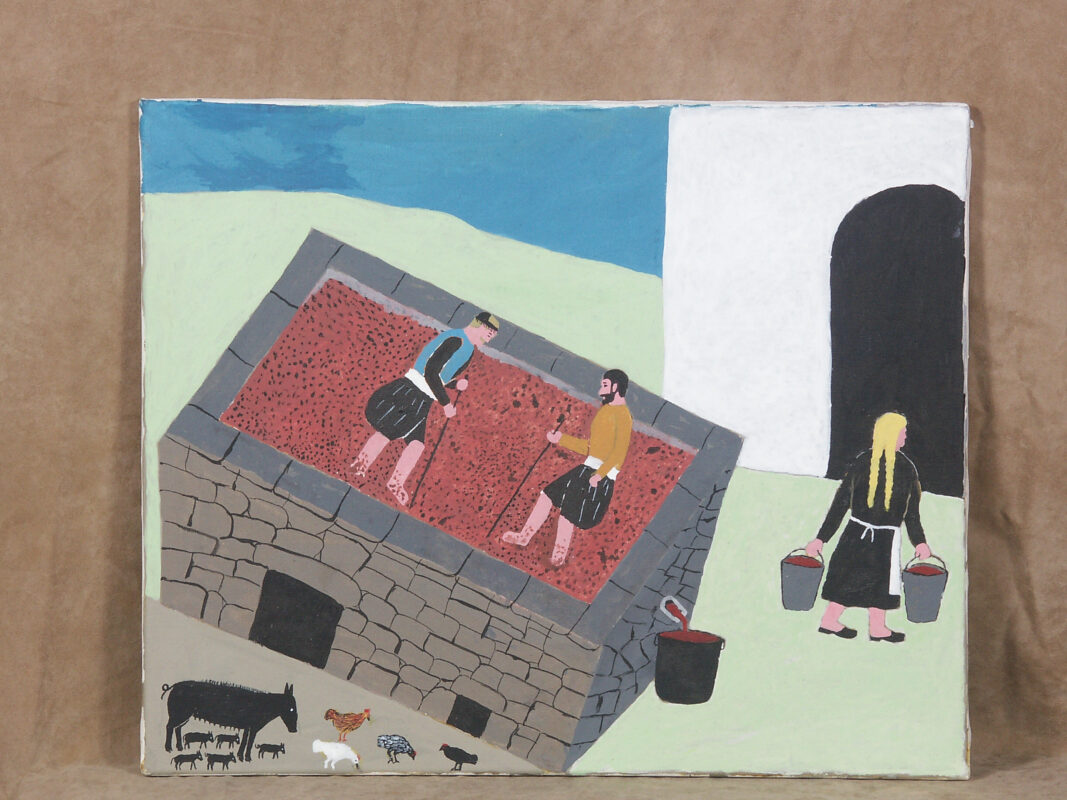
The grape harvest was always one of the most pleasant labors of the farmer. It wasn’t very tiring; it was a communal effort and involved gathering a good income. In the past, the women who came to help wore a “lidopodia” (a special apron) tied around their waists and placed the dried grape clusters—raisins made […]
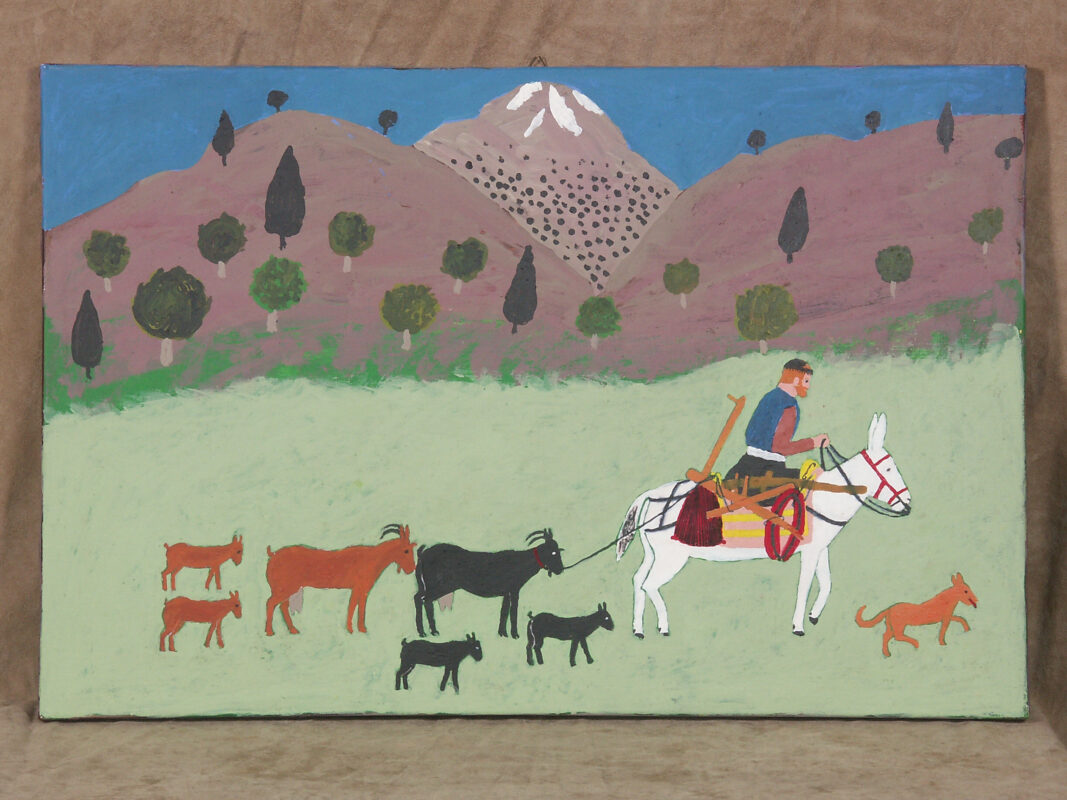
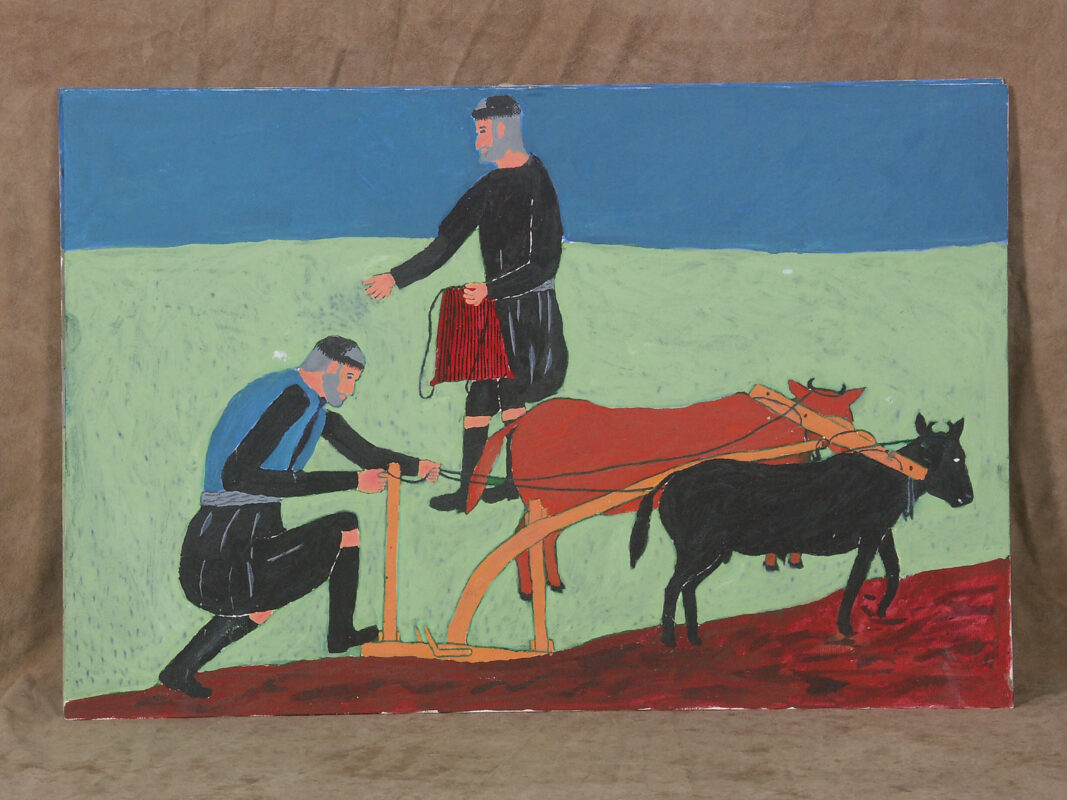
Often there were partnership pairs. Each partner would put in one ox, and together they would prepare the fields, the seed, and the labor, then share the harvest. If their fields weren’t enough, they rented fields from those who did not have a pairing. For as much seed as one field required for sowing, they […]
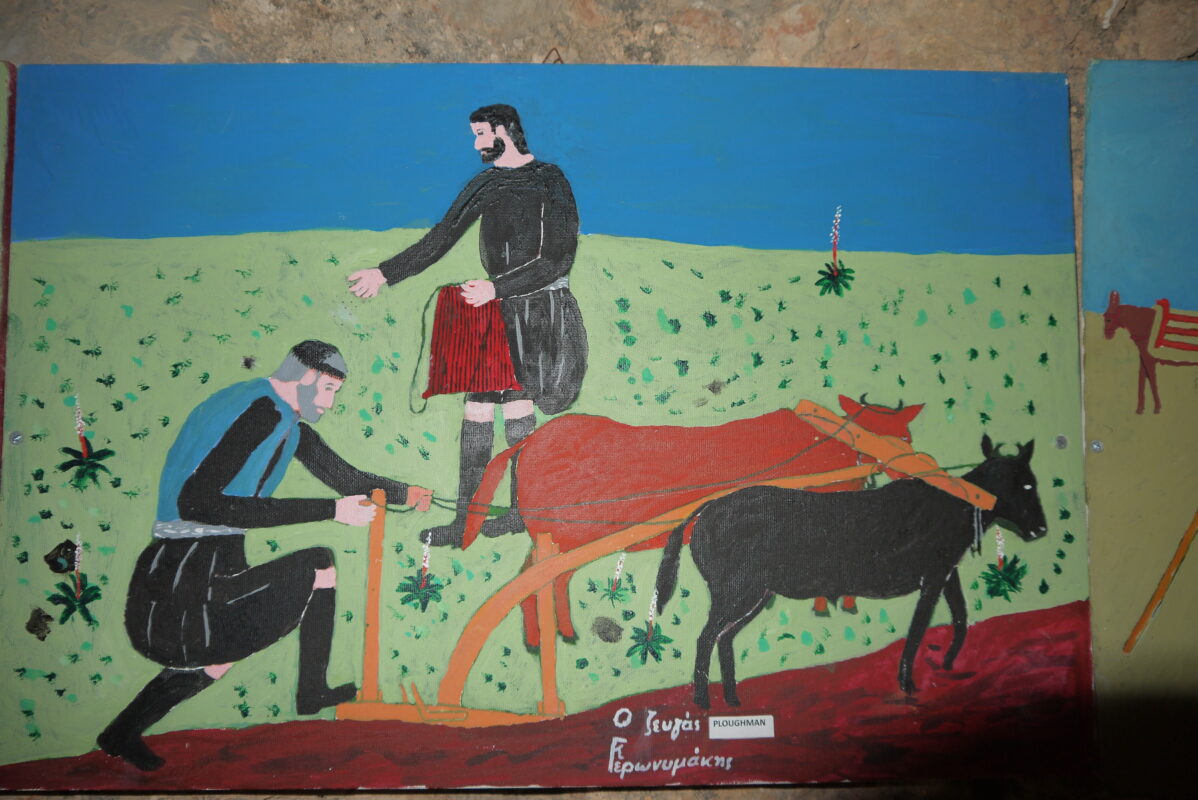
We would begin pairing when it rained enough “to soak the earth.” Usually, in the southern part of Crete, this was at the end of October. By November 21st, we calculated that half the seed should be sown in the ground; therefore, the day of the Presentation of the Virgin Mary was called “the day […]