


After the harvesting was done, we had to prepare for threshing. The stalks from the sheaves had to be processed. We would bring five or six oxen or mules onto the threshing floor, tying them close together so they’d move in a tight circle.
Author Archives: admin
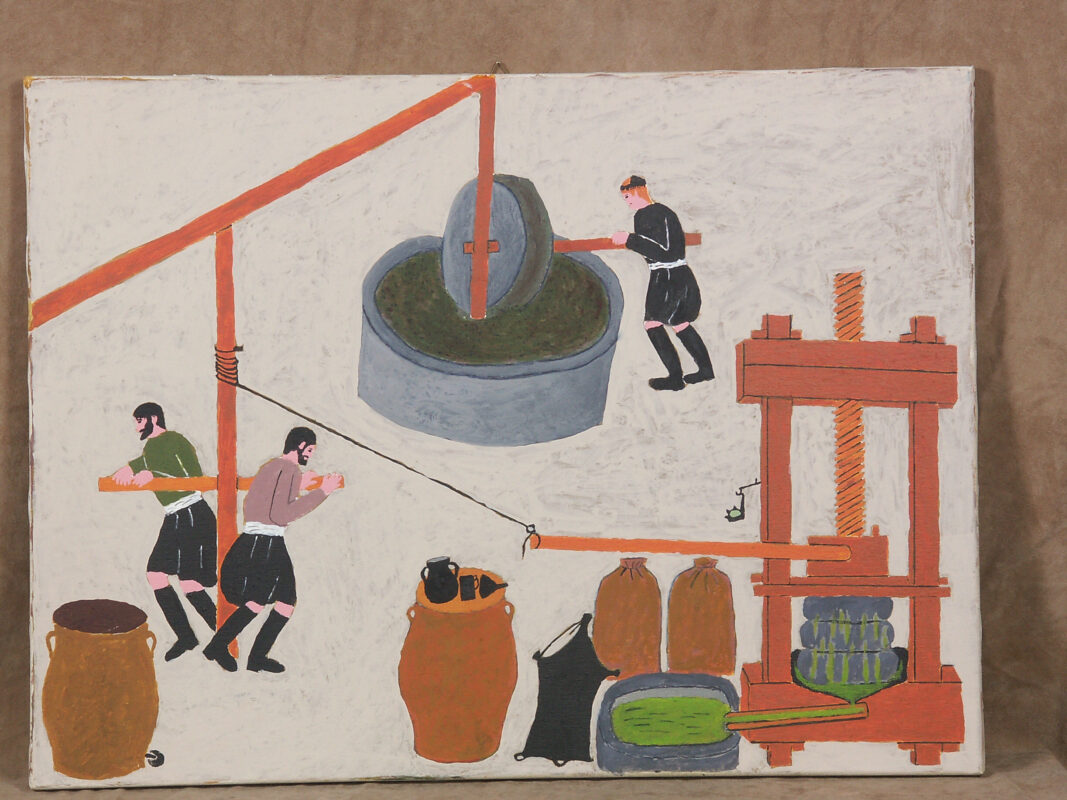
Processing of olives — Until the late 19th century, primitive olive presses were still maintained in many villages. In my homeland, I witnessed their ruins and, with the descriptions of the elders, I can still describe them: To grind the olives, they used a large stone as a base, because back then they didn’t have […]
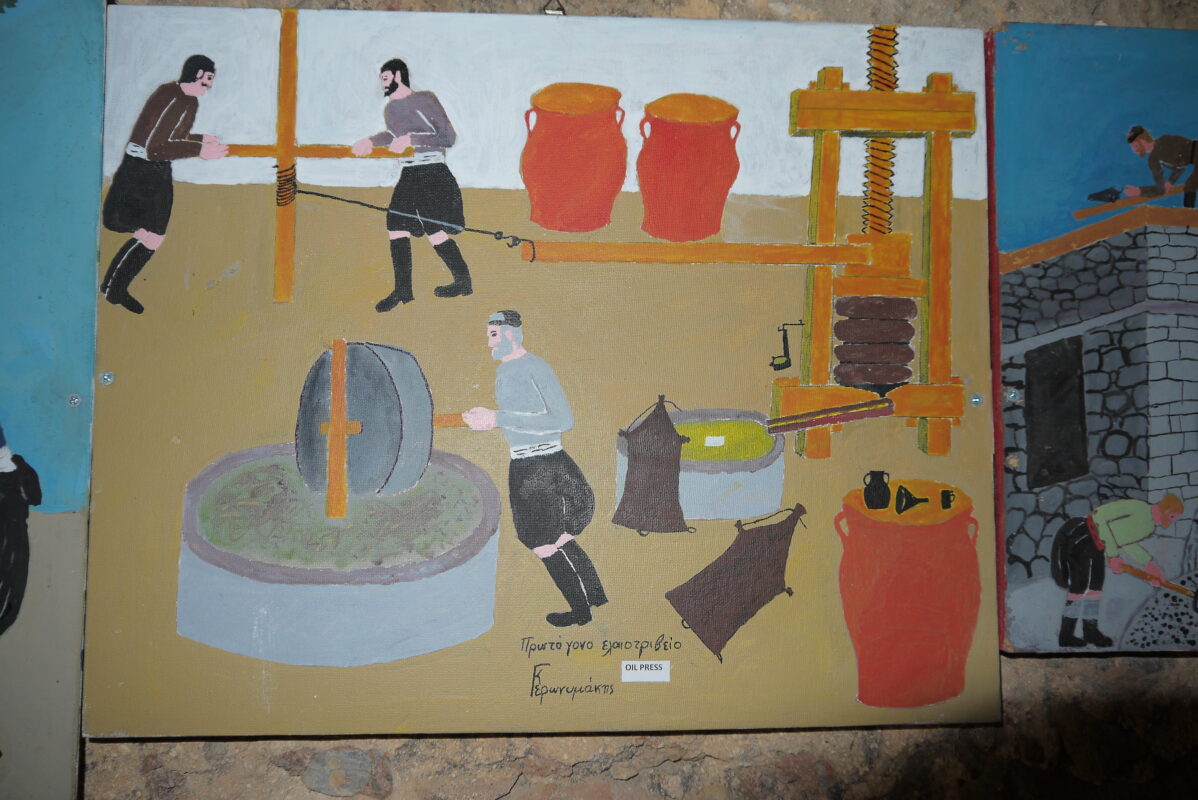
They placed a large millstone, and its axle was supported on one end by a wooden post standing upright in the middle of the base. The other end of the axle extended outward, and a man would push it with his chest and hands, turning the millstone to crush the olives. The part of the […]
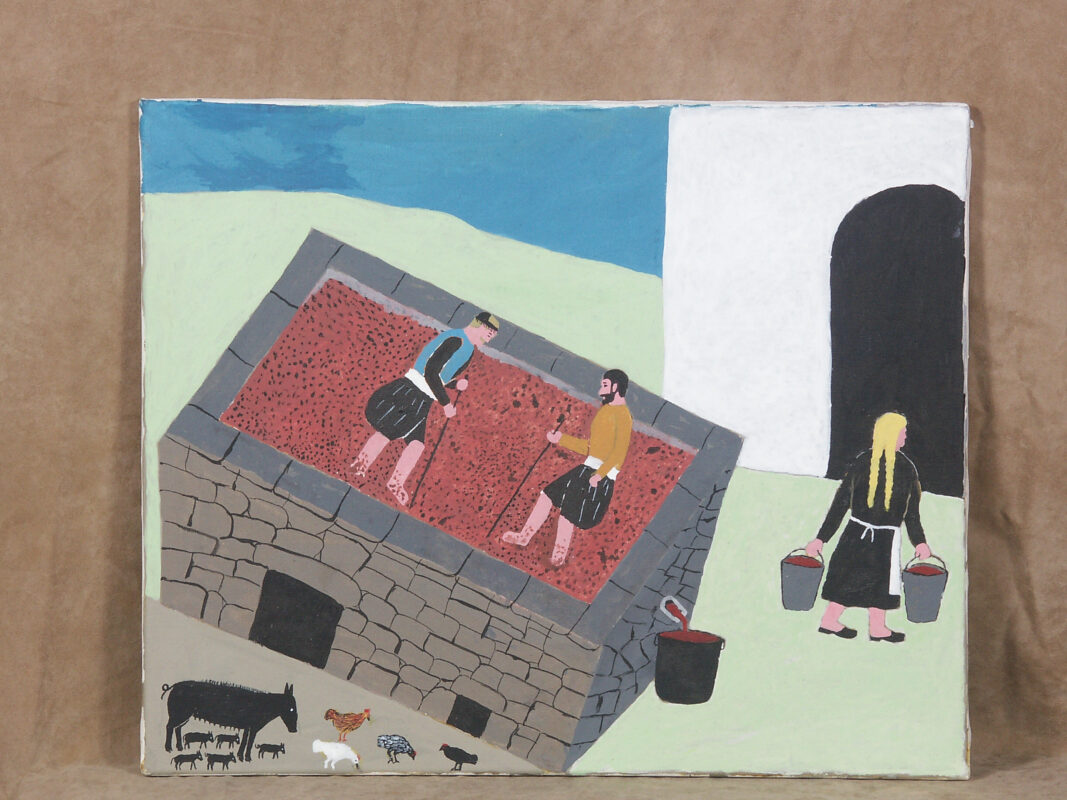
The grape harvest was always one of the most pleasant labors of the farmer. It wasn’t very tiring; it was a communal effort and involved gathering a good income. In the past, the women who came to help wore a “lidopodia” (a special apron) tied around their waists and placed the dried grape clusters—raisins made […]
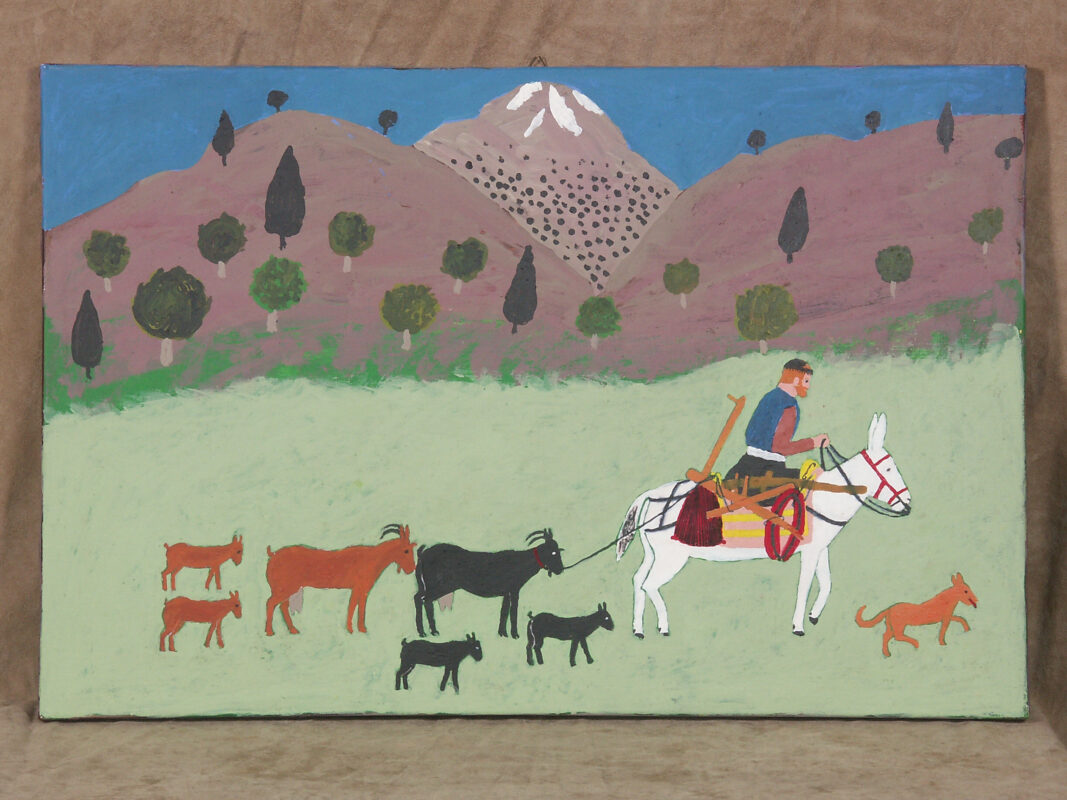
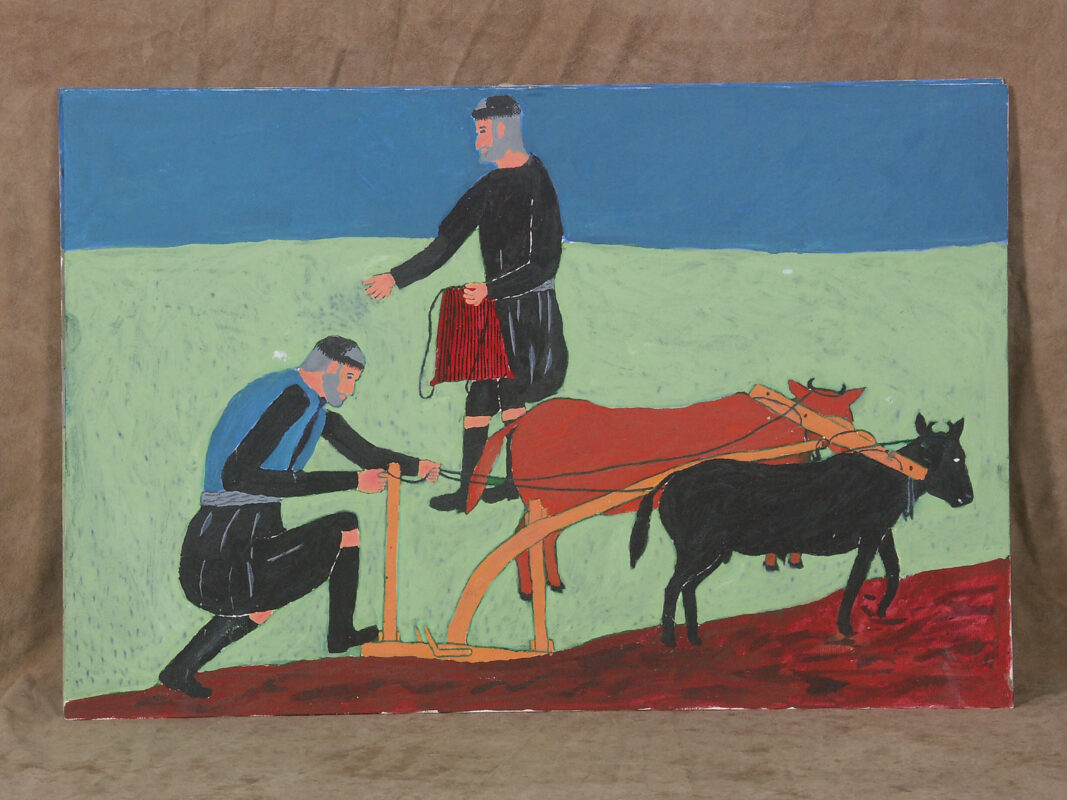
Often there were partnership pairs. Each partner would put in one ox, and together they would prepare the fields, the seed, and the labor, then share the harvest. If their fields weren’t enough, they rented fields from those who did not have a pairing. For as much seed as one field required for sowing, they […]
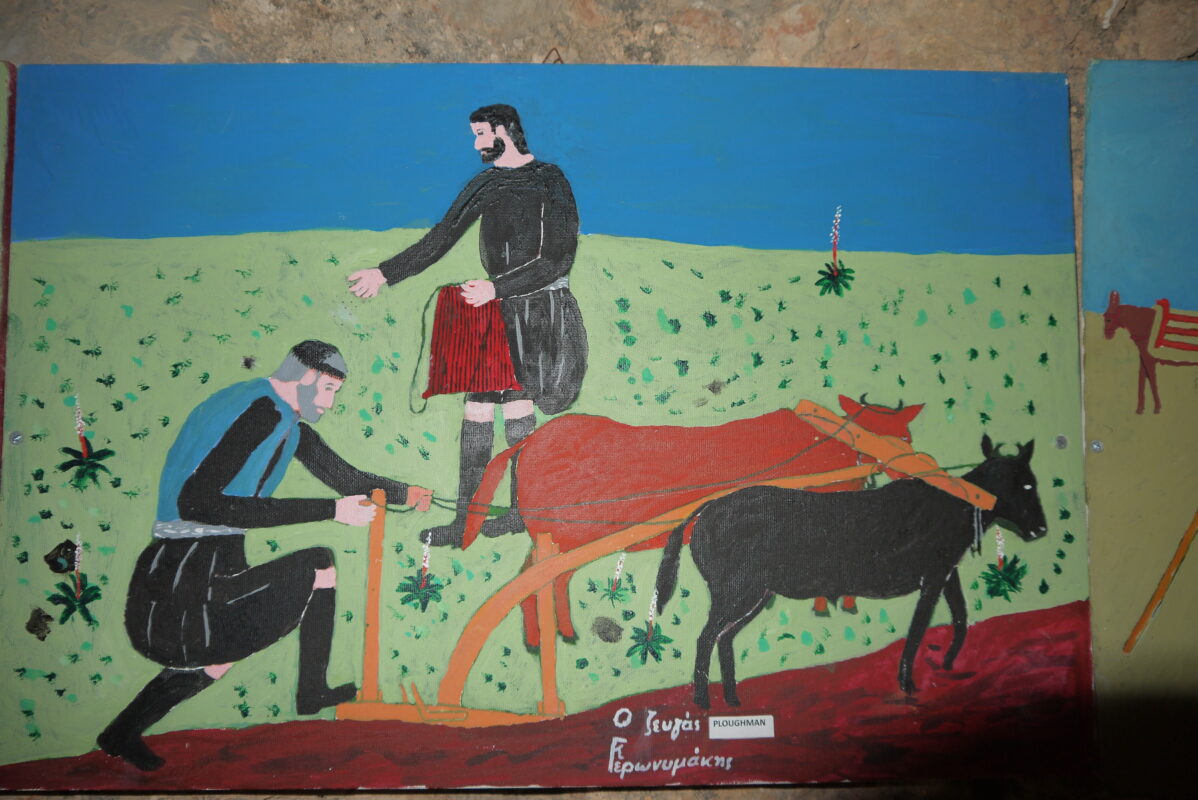
We would begin pairing when it rained enough “to soak the earth.” Usually, in the southern part of Crete, this was at the end of October. By November 21st, we calculated that half the seed should be sown in the ground; therefore, the day of the Presentation of the Virgin Mary was called “the day […]
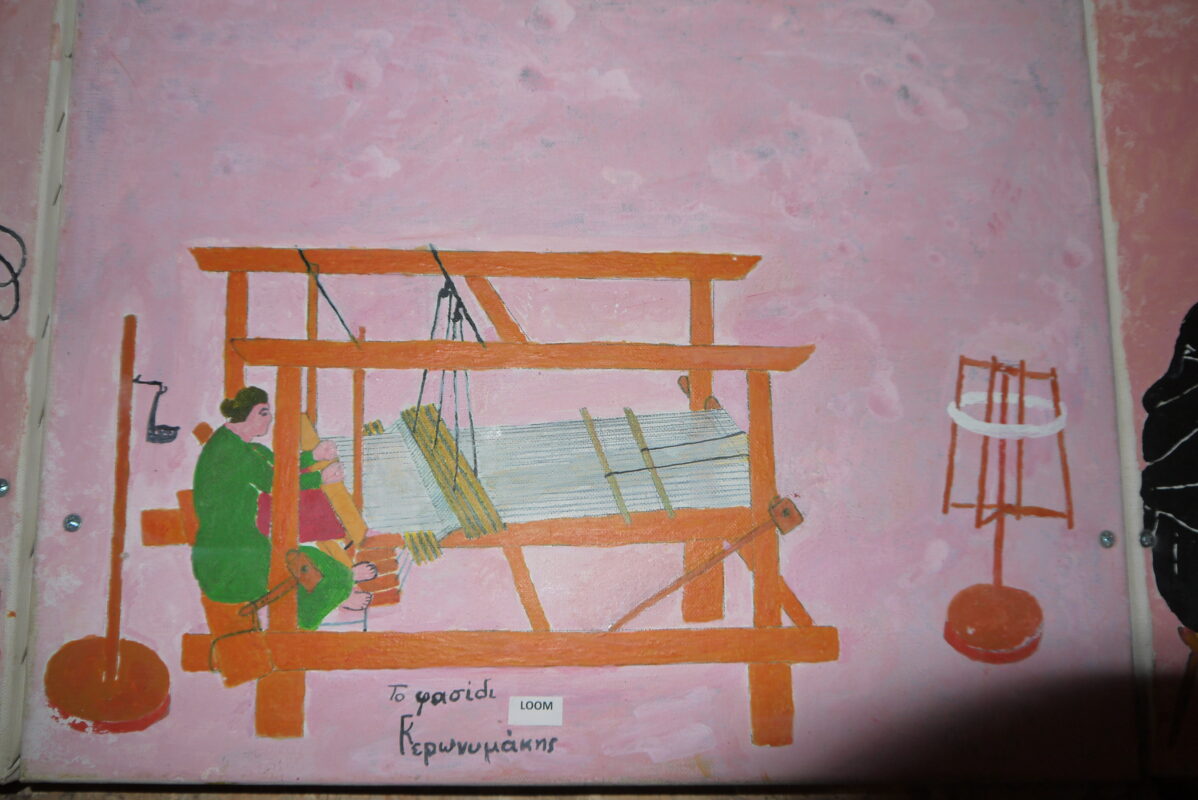
Often the comb makers traveled around the countryside making combs for the spindles. They did not have many tools and did not need a special place to work, nor did their work cause any disturbance to the environment.
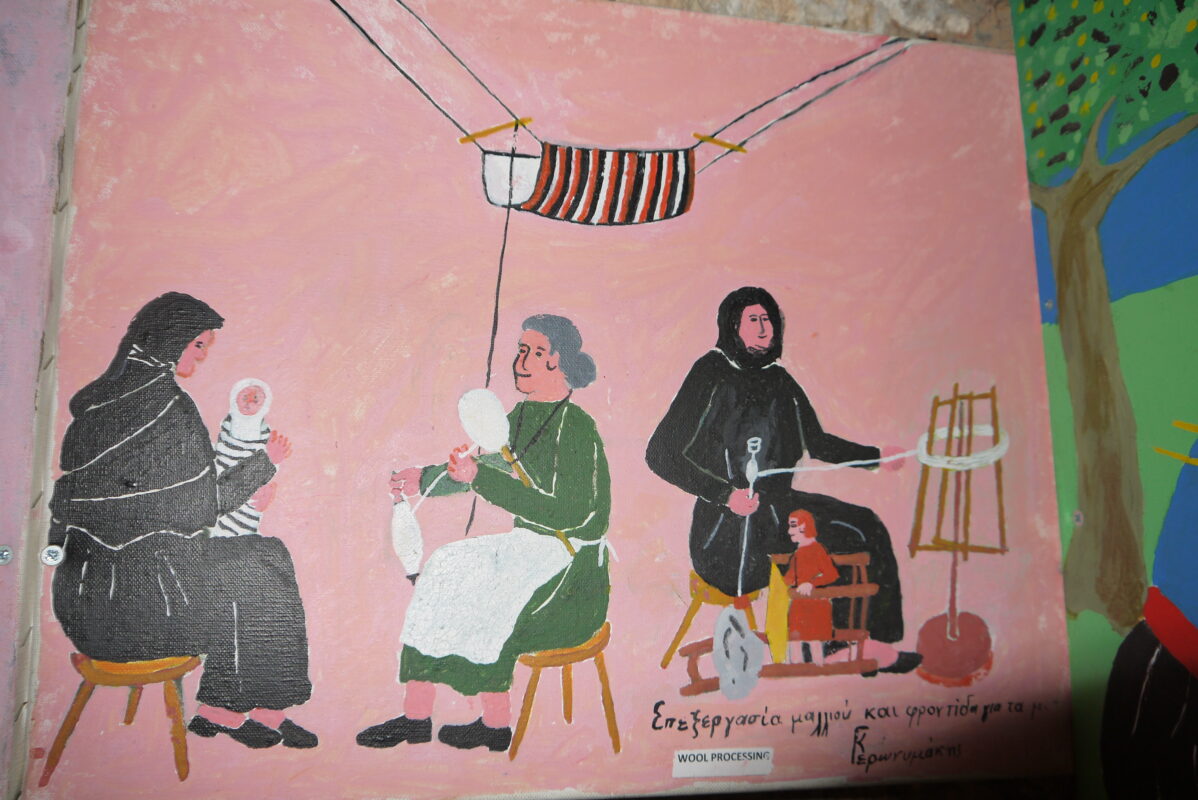
Often, the housewives would gather for “NYKTERI” Three, four, or five women would gather in one house, and by the light of an oil lamp, one would spin thread, another knit, a third would patch old clothes, while another might sew new garments by hand, as sewing machines were not available back then. They would […]
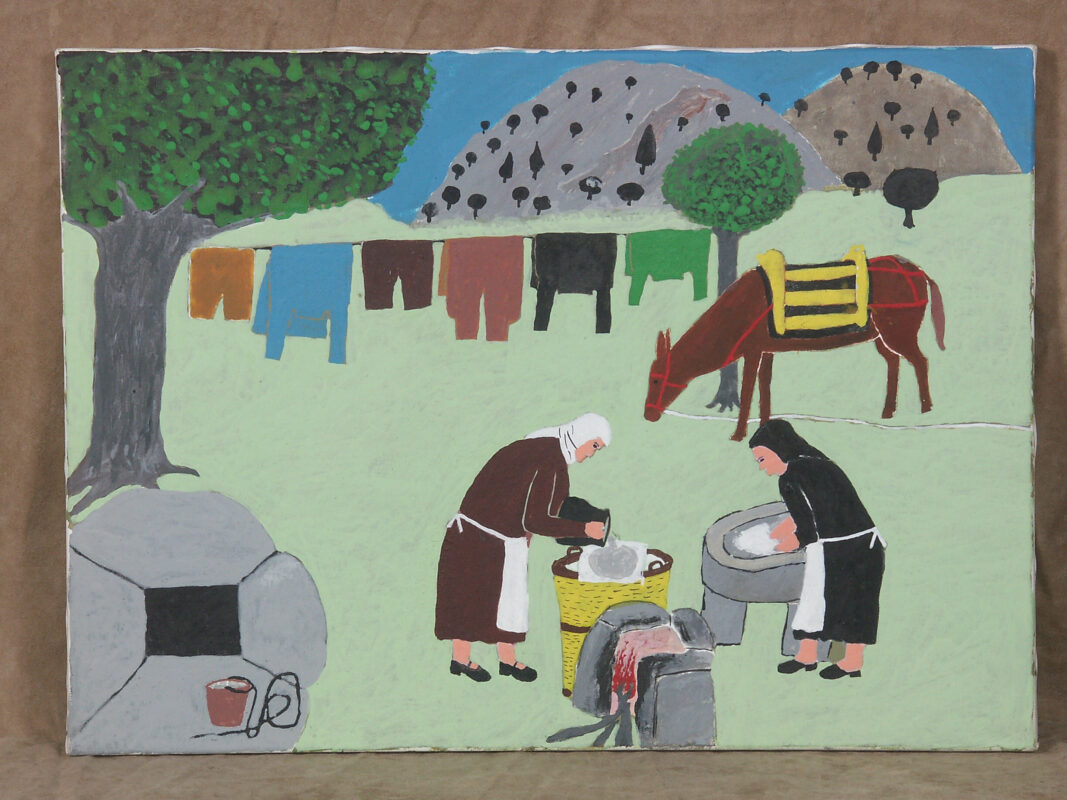
Not only were there no washing machines back then, but water wasn’t always readily available either. If the water source was far, the woman would load the donkey in the morning with clothes, firewood, the laundry basket, a pot to heat water, the soap she had made herself, ashes to help whiten the clothes, and […]
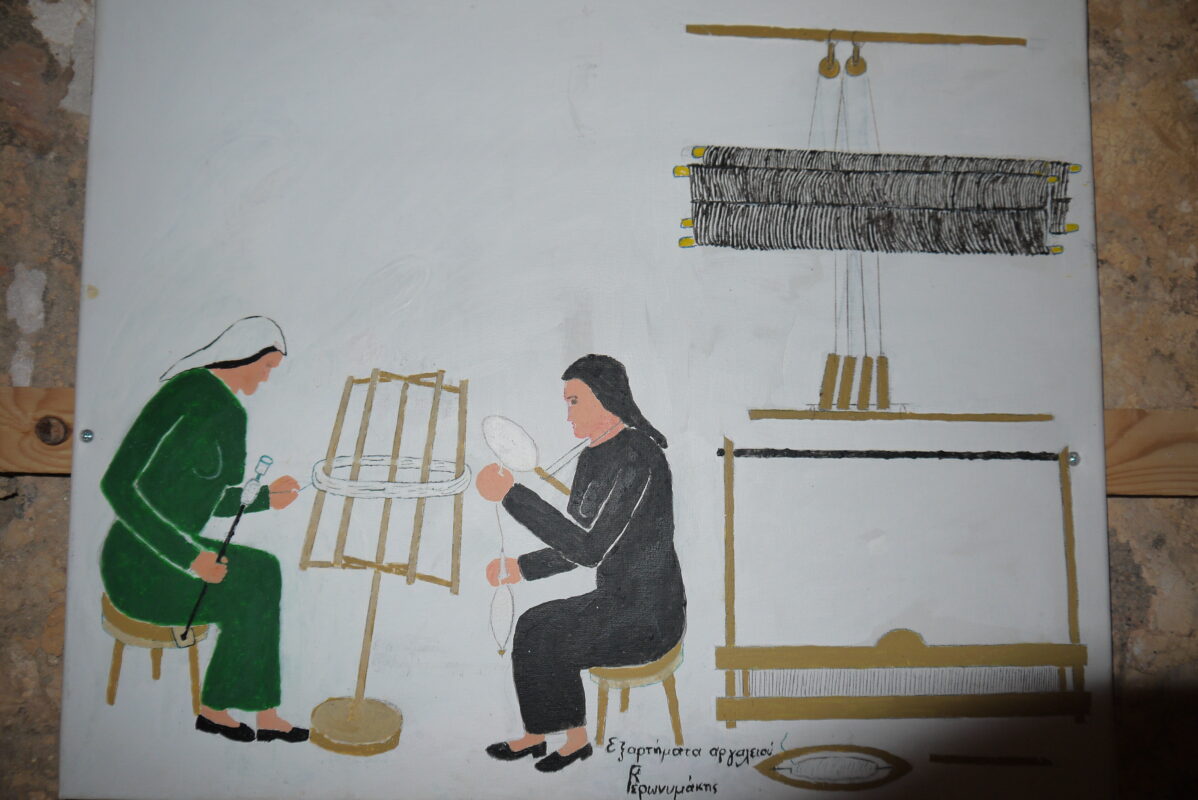
The “xástres” were two small boards, each about 0.40 x 0.40 meters, with hundreds of little teeth on each one. One board was fixed to the sides of the chair (as shown in the sketch) with the teeth facing upwards. They placed the wool on top and then pulled the other board over it to […]