

Five thousand years ago, we used herbs to fight diseases. In 2700 BC, a list of 365 medicinal plants was written in China. Also, Hammurabi, king of the Babylonians in the 17th century BC, had created a list of medicinal plants.
Author Archives: admin

For many years now, from time to time, I have published some of my works in the press — mainly on topics of cultural heritage or local history, but also occasionally as responses to columnists who attempt to distort or misrepresent history, often with ill intent.
Over the years, several of my works have been published in the press, and I have presented programs on television and radio stations. In all these cases, I have always dealt with folkloric, social, and historical subjects.

According to the views of paleontologists, it is accepted that during the Neolithic period, elephants, hippopotamuses, megaceroses (giant deer), and regular deer lived in Crete, along with small rodents, bats, turtles, and other species.

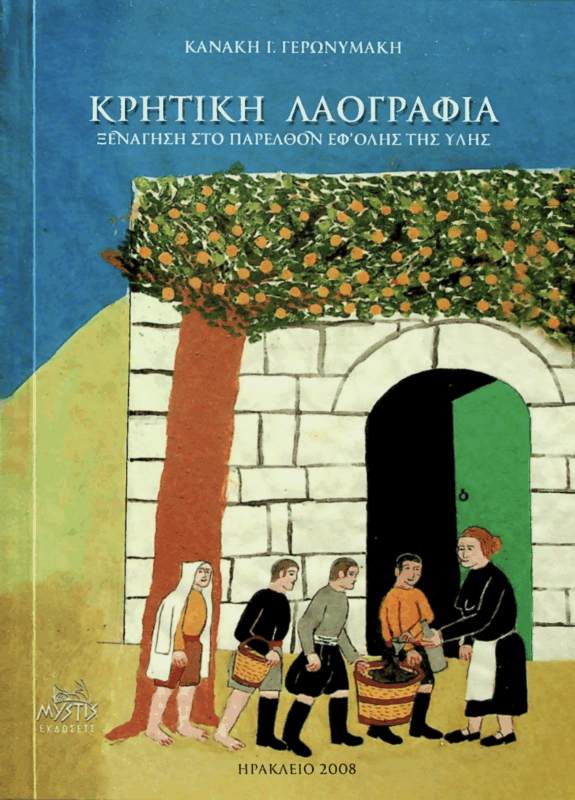
This book is, of course, my own work. However, the inspiration for publishing this material was not originally mine. On September 27, 2004, an exhibition of my naïve paintings opened, featuring works that depicted traditional occupations and the life of the mountainous countryside.

According to one version, the fairy tale was born in the East, specifically in India. However, from the depths of the centuries come the mythologies of all peoples, which are also fairy tales.

My first inspiration in the field of our cultural heritage was when I began recording certain proverbs, phrases, and even words that I noticed were gradually disappearing from the spoken language of the Cretan countryside.

In 1993, I published my book “The Naklia of Crete.” This book was long out of print, and I decided to republish it. However, over time, I thought it would be better to create a new book in the same style by combining this material with additional content I could add.

For many years, since my youth, I recorded rhymes, laments, proverbs, and even words that gave me the impression were at risk of disappearing from the language of our villagers, where that language was their last refuge.

If someone takes a walk through the countryside of Crete, they can see ruined huts, factories, watermills, threshing floors, ovens; they can see the pit of the lime kiln, the chimney pit of the charcoal kiln, and other signs of the semi-primitive life we lived until just a few decades ago.